Jersey cattle are best known for producing rich, creamy milk. But raise them on open pasture, give them the time they need to mature properly, and you end up with beef that is tender, beautifully marbled, and packed with flavour that grain-fed commercial beef simply cannot replicate.
The Jersey breed: not your typical beef cow
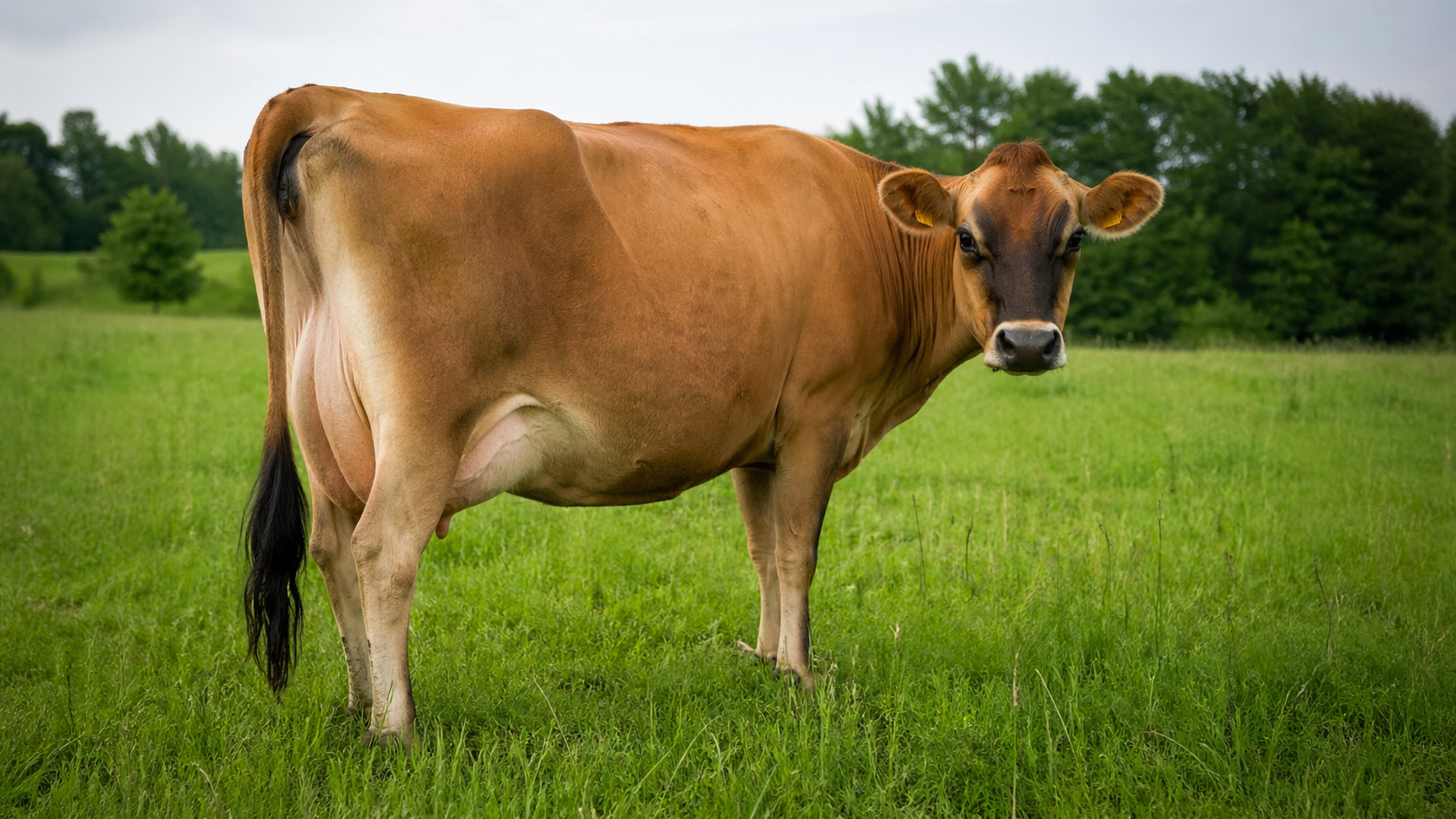
When most people picture a beef cow, they think of a large-framed Angus or a Hereford built for rapid weight gain and high yield. The Jersey is a different animal entirely. Smaller in frame, longer in maturity, and originally bred for dairy production, the Jersey is not the obvious choice for beef farming. And yet, those who have tasted well-raised Jersey beef tend to say the same thing: it is some of the best beef they have ever eaten.
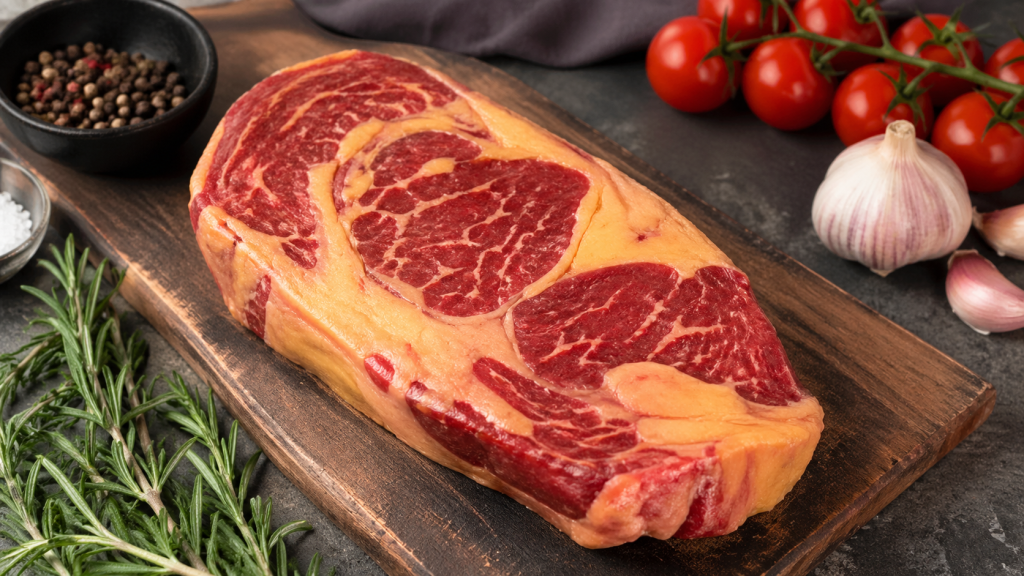
The reason comes down to genetics and how the breed processes and stores fat. Jerseys carry a higher proportion of intramuscular fat relative to their body size than most traditional beef breeds. This fat, laid down slowly over a longer growing period, distributes itself through the muscle in fine, even streaks, producing the kind of marbling that chefs and serious home cooks actively seek out. It is the same principle that makes Wagyu so prized. The difference is that Jersey beef achieves this naturally, without the extreme feeding programmes associated with premium Japanese beef.
What makes Jersey beef different: marbling and fat quality
Marbling is the single biggest indicator of flavour and juiciness in beef. Fat that is woven through the muscle fibre melts during cooking, basting the meat from the inside out and producing that characteristic richness that makes a steak worth eating slowly. Jersey cattle are genetically predisposed to marble well, and research from Massey University confirms that even under pasture feeding conditions, the breed’s genetic potential to deposit intramuscular fat produces a high level of marbling even at lower carcass weights.
Then there is the fat colour. Jersey beef carries a distinctly yellow fat, and this is a quality indicator, not a flaw. The yellow colour comes from beta-carotene, a naturally occurring pigment found in fresh grass. When cattle graze on pasture rather than being fed grain in a feedlot, they consume far more beta-carotene, which accumulates in their fat tissue and gives it that golden, buttery hue. In a Jersey, this effect is amplified because the breed naturally processes and retains more carotene than other cattle.
White fat in beef generally signals a grain-fed animal. Yellow fat signals a grass-fed one. And in a pasture-raised Jersey, that yellow fat is rich, flavourful, and melts beautifully into the surrounding meat during cooking. Far from being something to cut away, it is where a great deal of the flavour lives.
Pasture raising: why it matters for flavour and quality
The way an animal is raised has an enormous impact on the quality of the beef it produces. Pasture-raised cattle live outdoors, graze on a natural diet of fresh grass and legumes, and develop muscle through natural movement rather than being confined to feedlots. This lifestyle produces meat with a different fat composition, a different texture, and a different depth of flavour compared to conventionally raised beef.
Research shows that pasture-raised Jersey beef has a favourable fatty acid profile, with higher concentrations of monounsaturated fats compared to many other breeds. These are the same types of fats associated with better cardiovascular health, making grass-fed Jersey beef not only better tasting but also a more nutritionally sound choice.
Beyond the nutritional profile, there is something to be said for the eating quality that comes from an animal that has lived well. Pasture-raised cattle move more, which builds denser, more flavourful muscle. They eat a varied, natural diet, which contributes complexity to the flavour of the meat. And because they are not pushed for rapid growth, the muscle fibres develop more slowly, resulting in a naturally tender texture that does not rely on artificial tenderising or excessive ageing to deliver a good result.
At Luigi’s Beef, our Jersey cattle are raised on pasture from the start. They graze freely, mature at their own pace, and are never rushed through a feedlot system. This is not the fastest or most commercially efficient way to produce beef, but it is the right way if the goal is quality on the plate.
Tenderness: a natural advantage
One of the lesser-known qualities of Jersey beef is its natural tenderness. Because Jerseys grow more slowly than dedicated beef breeds, the muscle fibres do not develop the same coarseness that can make commercially raised beef chewy or dense. The meat stays fine-grained and supple, and it responds beautifully to a wide range of cooking methods, from a quick pan sear to a long, slow braise.
The Massey University study referenced above found that beef from Jersey cattle recorded the lowest Warner-Bratzler shear force values of any breed tested, which is a scientific way of saying it is the most tender. Taste panels in the same research consistently rated Jersey beef as more acceptable than comparison groups, scoring higher for tenderness, juiciness, flavour, and overall eating quality.
This tenderness is not just about the cut. It runs through the whole animal. Even cuts that would be considered secondary on a conventional beef carcass, things like the chuck, brisket, or short rib, carry a richness and succulence in a Jersey that makes them genuinely exciting to cook with.
Why yellow fat confuses people (and why it should not)
Yellow fat has a reputation problem in the commercial beef industry, and it is largely an unfair one. In a commercial grading context, yellow fat is sometimes associated with older animals or poor condition. But in a pasture-raised Jersey, yellow fat is the direct result of a healthy, grass-based diet and natural carotene retention. It is a sign of quality, not a defect.
The confusion arises because most consumers have grown up eating grain-finished beef, where the fat is white. White fat has become the visual norm, and anything that deviates from it raises questions. But once people understand what the yellow colour actually means, and once they taste the beef, the conversation changes very quickly.
The beta-carotene that creates the yellow colour is the same compound found in carrots, sweet potatoes, and dark leafy greens. It is a precursor to Vitamin A and a natural antioxidant. Its presence in Jersey fat is a direct reflection of what the animal ate, and in the context of pasture-raised beef, it is something to look for, not avoid.
When Jersey fat renders during cooking, it does so with a richness and depth that white, grain-fed fat does not match. It bastes the meat, carries the flavour of the grass the animal grazed on, and leaves a finish on the palate that is distinctly full and satisfying.
Jersey beef versus commercial beef: the honest comparison
Jersey beef is not a direct substitute for mass-produced commercial beef, and it is not trying to be. It occupies a different category entirely, one defined by quality over volume, flavour over yield, and patience over speed.
Commercial beef is optimised for efficiency. Large-framed breeds are selected for rapid weight gain, high yield, and the ability to convert grain into mass as quickly as possible. The result is a product that is consistent, widely available, and affordable, but one that often lacks depth of flavour and relies heavily on ageing, marinating, or preparation to be at its best.
Jersey beef takes longer to produce, comes in smaller portions per animal, and costs more per kilogram as a result. But what you get in return is beef with genuine character. Flavour that is present from the first bite. A texture that does not need to be worked around. Fat that adds to the experience rather than being trimmed away and discarded.
For the home cook who cares about what is on the plate, or the food lover who wants to understand where their meat comes from and how it was raised, Jersey beef from a pasture-based farm is a meaningful step up from anything available in a supermarket.
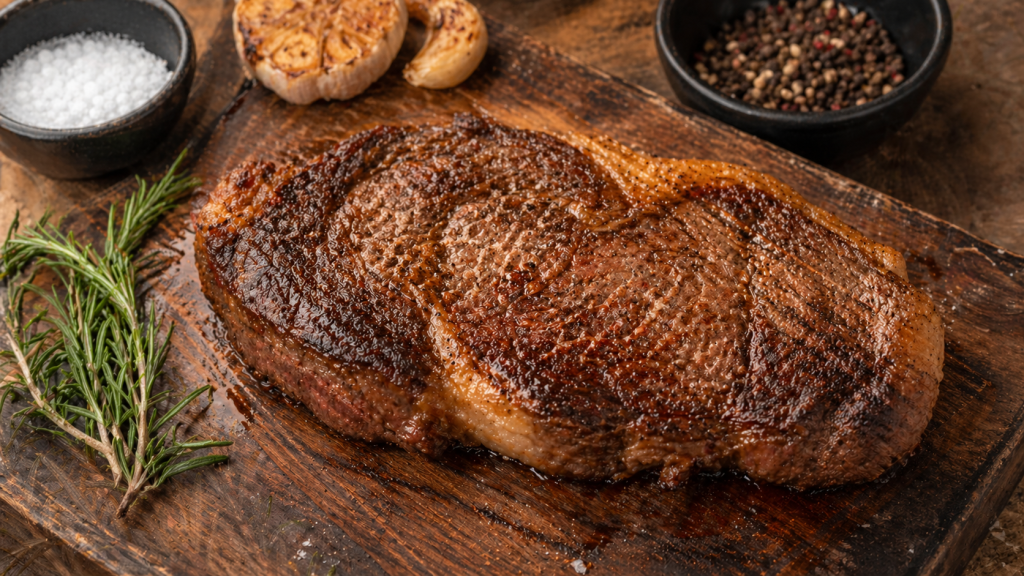
Luigi’s Beef: pasture-raised Jersey beef done properly
At Luigi’s Beef, we raise our Jersey cattle on pasture the way it should be done. Our animals graze freely on open land, develop at a natural pace, and are never subjected to the shortcuts that compromise quality in commercial beef production. The result is beef with the rich, yellow fat and fine marbling that the Jersey breed is capable of at its best, raised with care and delivered to you in the condition it deserves to be in.
We believe that the best beef comes from animals that have lived well, eaten well, and been raised with patience. Our Jersey cattle reflect that belief in every cut we produce, from the ribeye to the brisket, from the sirloin to the short rib. If you have never tried properly raised Jersey beef before, we would genuinely encourage you to. It is a different experience, and a better one.
Ready to taste the difference that pasture-raised Jersey beef makes? Get in touch with Luigi’s Beef and experience genuinely flavourful, richly marbled beef raised the right way. Visit Luigi’s Beef →