It’s a question more South African consumers are asking, and it’s a good one. The terms “free range” and “grass-fed” are often used interchangeably on packaging and menus, but they don’t actually mean the same thing. Understanding the difference matters, especially when you’re making a deliberate choice about the quality and origin of the beef on your plate.
At Luigi’s Beef, we want you to know exactly what you’re getting. So let’s break it down.
Free Range and Grass Fed Are Not the Same Thing
Free range refers to how an animal lives, specifically whether it has open access to pasture rather than being confined to a feedlot or indoor system. A free-range cow roams, grazes, and lives as cattle naturally should.
Grass-fed refers to what the animal eats. A truly grass-fed cow derives its nutrition from pasture grasses and natural forage rather than grain-based feed.
Here’s where it gets interesting. A cow can technically be free range but still be supplemented heavily with grain. And a cow can be marketed as grass-fed but spend limited time on actual pasture. Neither of those situations tells the full story.
The term that brings both together is pasture-raised, and that’s exactly how we describe our beef at Luigi’s.
What Does Pasture-Raised Actually Mean?
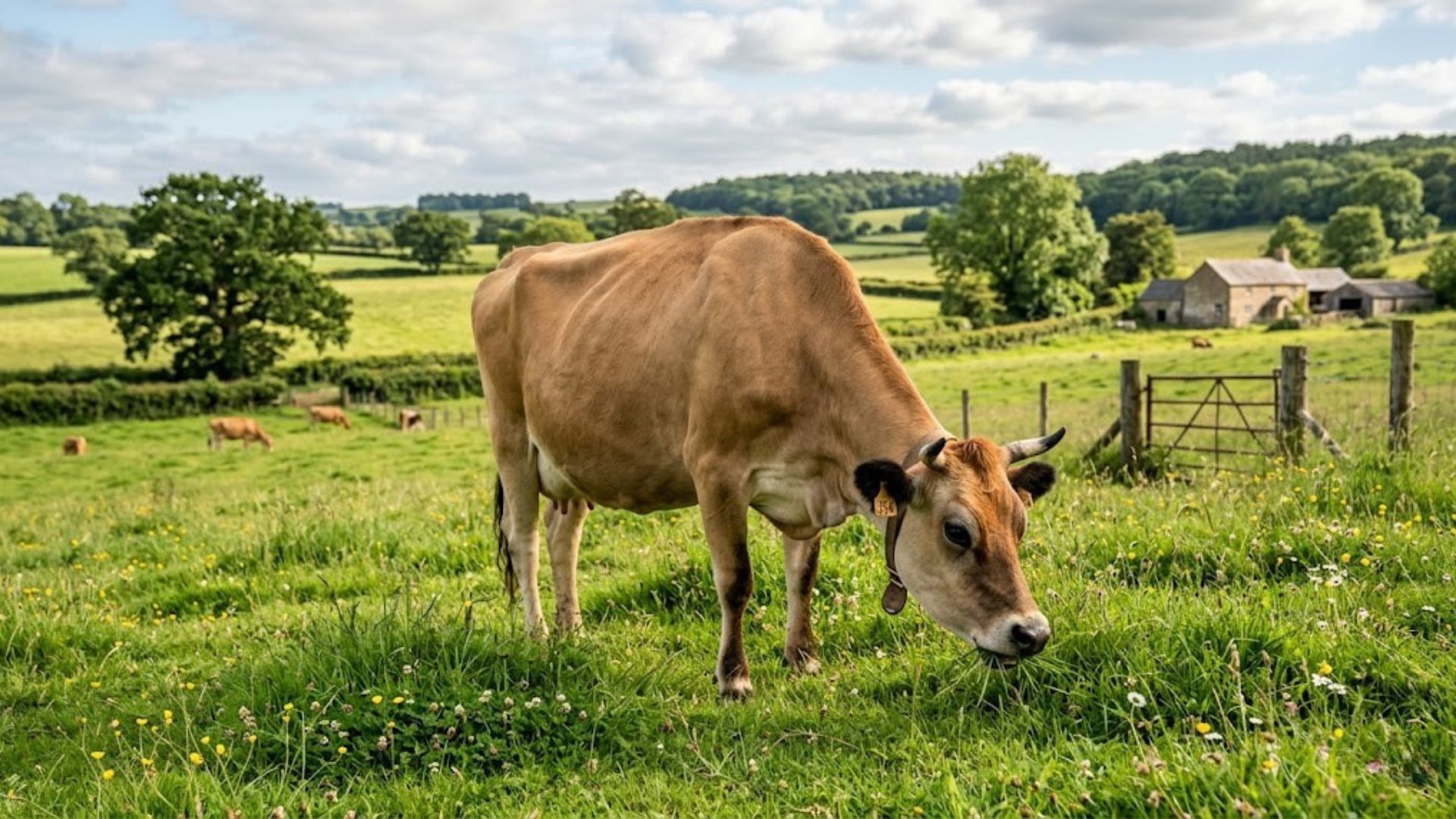
Pasture-raised means the cattle live on open pasture for the duration of their lives. They graze freely, eat what grows naturally underfoot, and are never confined to a feedlot. Their diet comes from the land, not from a bag.
This is the most honest way to describe beef that is both free range and grass-fed in practice. The animals live and eat the way cattle are designed to, and that shows up directly in the quality of the meat.
Why Yellow Fat Is Actually a Good Sign
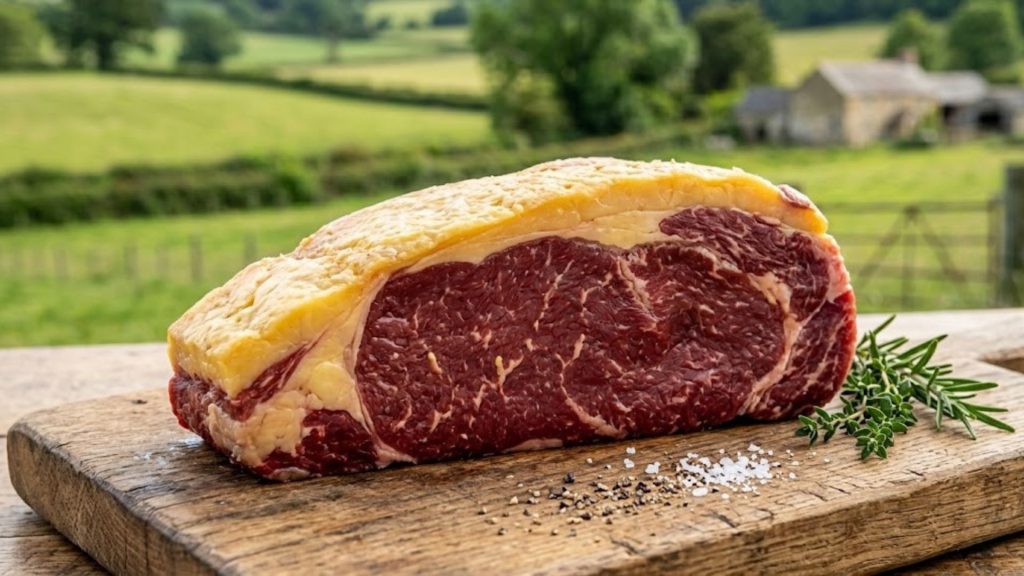
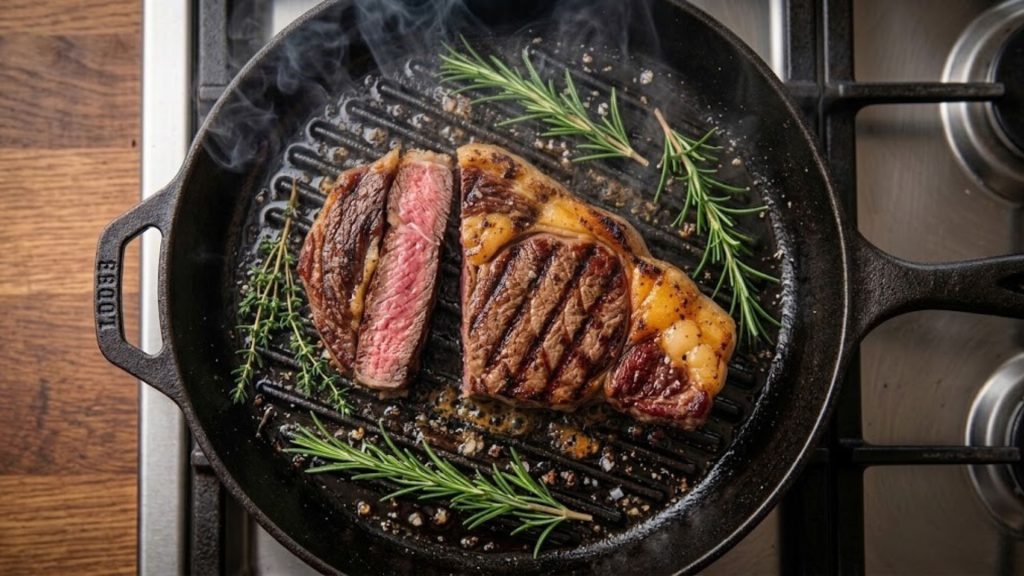
If you’ve ever bought beef and noticed the fat has a golden or yellowish colour rather than bright white, that’s not a flaw. That’s exactly what you want to see.
The yellow colour comes from beta-carotene, a natural pigment that occurs in pasture grasses. When cattle graze on fresh grass, they absorb beta-carotene through their diet, and it is stored in the fat. Beta-carotene is the same compound that gives carrots and other vegetables their colour, and your body converts it to Vitamin A as needed. It’s also a natural antioxidant.
Grain-fed beef, by contrast, has white fat. Grain contains very little beta-carotene, so there’s nothing to give the fat its golden hue. White fat is not unhealthy, but it is a clear indicator that the animal spent time in a feedlot rather than on pasture.
When you see yellow fat in Luigi’s beef, you’re looking at direct evidence of a pasture-raised, grass-fed diet. It’s the colour of good farming.
Our Jersey Beef and Why It Stands Apart
At Luigi’s, we work with Jersey cattle, and this is something we’re genuinely proud of. Jersey cows are known primarily as dairy animals, but their beef is exceptional in ways that many people haven’t discovered yet.
Jersey cattle produce beef with beautiful natural marbling and a rich, full flavour that comes from spending their lives on pasture. Because they are naturally smaller-framed animals, the meat tends to be finer-grained and deeply flavourful. Their grass-fed diet amplifies everything that makes the breed special.
The yellow fat on Luigi’s Jersey beef is particularly pronounced and is one of the clearest signs of the quality of life these animals have had. It speaks to the beta-carotene richness of the pastures they graze on and the fact that they have never been artificially fattened on feedlot grain.
For people who have grown up thinking yellow fat is something to avoid, we’d ask you to reconsider. That colour is your guarantee. It tells you the animal lived outdoors, ate grass, and was raised the way cattle should be.
Grass Fed Beef and Nutrition
Pasture-raised, grass-fed beef has a nutritional profile that differs meaningfully from conventionally farmed grain-fed beef. It tends to be higher in Omega-3 fatty acids, higher in CLA (conjugated linoleic acid), and richer in fat-soluble vitamins, including Vitamin A and Vitamin E. These are the benefits that come directly from a diet of fresh pasture grass rather than grain.
For health-conscious South African consumers who want to know that their food is doing something good for them, pasture-raised Jersey beef is a genuinely different product to what’s available in most supermarkets.
The Bottom Line
Free range does not automatically mean grass-fed. Grass-fed does not automatically mean pasture-raised. But when you find beef that is all three, raised on open pasture, fed on grass, and never sent through a feedlot, you’ve found something worth paying attention to.
That’s what Luigi’s Beef is. Pasture-raised Jersey beef, with the golden fat to prove it. If you have questions about how our cattle are raised or where our beef comes from, we’re happy to talk. Real food should come with honest answers.